
CRM for bike workshops: why the customer relationship pays
A CRM for bike workshops turns customer history into retention: less churn, more repeat visits, relationships that outlast a single tune-up.
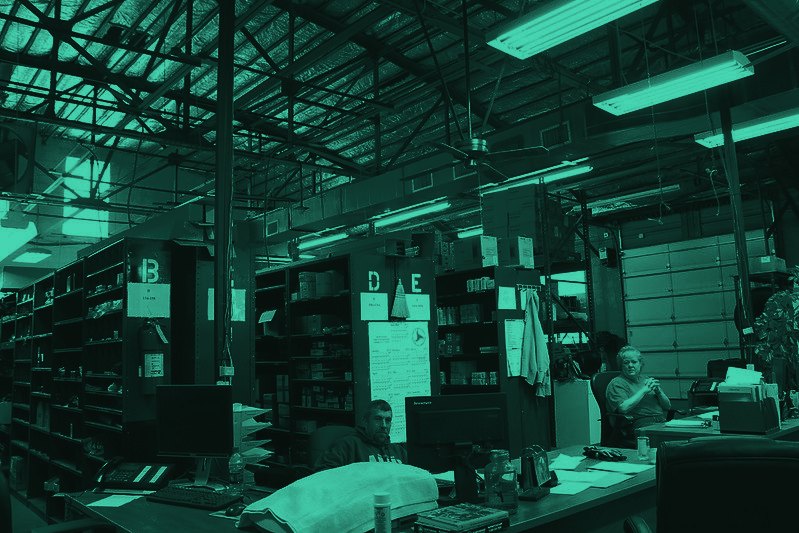
A customer drops off a bike for a tune-up and then vanishes for two years. When they finally come back — or don't, because they've since found a mechanic closer to home — the shop hasn't just lost a service ticket. It has lost the history of that relationship, and with it the chance to catch the exact moment that customer needed help. This is where a CRM for bike workshops stops being a nice-to-have and becomes the difference between a repeat customer and one gone for good.
Why service is the real asset of a bike shop
Service now accounts for up to 60-90% of revenue and roughly 70% of profit in many bike shops; without that income, plenty of stores today would be underwater. About 95% of Italy's roughly 4,000 specialist retailers offer repairs, and eBikes — which make up around a fifth of sales but close to three-quarters of workshop jobs in 2024 — have made service even more central, with eBike warranties now the sector's number-one operational headache.
If service generates most of the margin, the relationship with the people who bring their bikes in is the shop's single most valuable asset. And yet it's often the least structured one: paper diaries, notebooks, scattered WhatsApp threads, whatever the mechanic happens to remember. That works fine while the shop is small and the owner knows every customer by name. It stops working the moment volume grows, a staff member changes, or a customer shows up while the owner is on holiday.
What changes with a real customer-bike history
A CRM built for workshops isn't a contact database — it's the cross-referenced history of every customer with every bike they own. It means knowing, the moment someone calls or messages, what work has already been done, when the chain was last replaced, whether their eBike is still under warranty, which battery it runs and how many watt-hours it's rated for. It's the difference between asking "remind me what bike you have?" and being able to say "last time the chain needed watching — how's it holding up?"
That history carries value well beyond a single visit. With component lead times reaching 340-700 days at their worst in 2022, and Italy's bike supply chain revenue sliding from roughly €3.2 billion to about €2.5 billion between 2022 and 2025 while margins compressed from 7.6% in 2021 to 3.2% in 2023, a workshop can no longer afford to rebuild the relationship with every returning customer from scratch. It needs to spot them before they go elsewhere.
The silent churn nobody measures
By 2026, retention and churn are being cited as accounting for something like 25-35% of revenue in service-based businesses, with email automation now treated as standard practice. In bike service that translates into a very concrete question: how many customers who had a tune-up twelve months ago never came back — and did anyone notice? Without a structured history, that churn is invisible. No alarm goes off; things simply stop happening.
A bike shop CRM turns that silence into a signal: the bike that hasn't been back in a year, the eBike approaching the end of its warranty, the customer who registered a frame serial number and never booked a follow-up appointment. This isn't aggressive marketing — it's relationship maintenance, the same logic that keeps an eye on chain wear before it wrecks the chainring.
A history that pays off for the customer too
The value of that history isn't the shop's alone. With roughly 350,000 bike thefts a year in Italy causing an estimated €150 million in damage, and theft discouraging purchase in seven cases out of ten, a cyclist with a documented maintenance history holds something sturdier than a memory: proof of care that matters at resale, in an insurance claim, or in a disputed warranty. And with the Digital Product Passport becoming mandatory from 2027 for new bikes sold in the EU, anyone already in the habit of keeping a digital maintenance record starts ahead of the curve.
The relationship between a workshop and its customers, in short, doesn't end when the repair does — it's a thread worth not cutting, appointment after appointment. CrankPal was built to help workshops hold onto that thread, with a customer-bike history designed for the everyday work of people who fix bikes, not just sell them.
Make service your profit center
CrankPal handles job sheets, inventory, invoicing and customers in one place — with the workshop at the core.
Discover CrankPal for workshops Get the free guideGet new articles
Workshop management, industry data and maintenance. One email, no spam.