
Overstock 2023-2025: what shops learned
Overstock 2023-2025: how the bike market crisis hit shop margins with endless lead times and undelivered orders, and what shops actually learned.
In 2022, roughly four orders out of ten never showed up at the shop. That single number explains more about the bike market crisis that swept the Italian trade between 2023 and 2025 than any headline could. Anyone running a workshop or a bike shop through those years remembers it well, because that was the year the industry learned more about inventory discipline than in the previous decade combined.
How the bubble inflated
It starts in 2020. The pandemic bike boom pushes Italian sales to 2.01 million units, up 17% year over year. Demand explodes exactly as supply chains seize up, and shops respond the only way that feels rational in the moment: order everything, order early, order double if needed, because the perceived risk isn't an overstuffed stockroom — it's an empty one. Component lead times stretch to 340-700 days, in some cases nearly 24 months: a shop placing an order today has no real idea when, or whether, it will actually receive what it ordered.
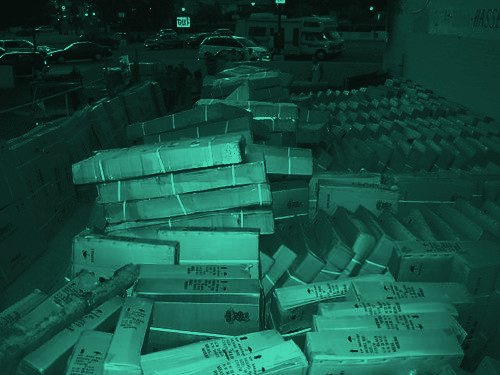
That's where the bubble takes shape. In 2022, around 40% of ordered products were never delivered at all. Duplicate orders placed with multiple suppliers as a hedge — a common survival tactic during the component shortage — stack on top of late deliveries that finally land just as demand has already turned. The result is a stockroom bloated with goods that arrive far too late, often at double the volume actually needed.
The bill comes due as demand falls
Because by then demand had already turned. After the 2020 peak, the Italian market drops 10% in 2022 (1.7 million units), then falls off a cliff with a 23% decline in 2023 (1.36 million), before settling at 1.303 million in 2025, still down 4%. It's the worst possible scenario for anyone who bought based on 2020 assumptions: full warehouses, capital tied up in stock, and demand that shrank by nearly a third from its peak within three years.
The effect shows up straight in the industry's numbers. Total trade revenue falls from €3.2 billion in 2022 to roughly €2.5 billion in 2025. But the harshest figure is on margins: down from 7.6% in 2021 to 3.2% in 2023. Aggressive discounting to clear unsold stock, components bought at emergency-era prices and later sold at a loss just to free up cash, working capital locked in boxes nobody wanted anymore — the exact dynamic that had rescued shop finances in 2020-2021 went on to erode them in the years that followed.
The lesson: buy for the workshop, not the shelf
The lesson the sharpest shops took from these three years isn't "order less" in some generic sense — it's ordering differently: fewer bets on whole-bike volumes chased on the momentum of the moment, and more discipline around what actually gets consumed — inner tubes, tires, chains, brake pads, and increasingly e-bike parts, from motors to batteries measured in Wh to chainrings. This is where Italian shops' positioning has solidified: the workshop, not new-bike sales alone, is the real profit center. Service now accounts for up to 60-90% of shop revenue and roughly 70% of overall profit; 95% of Italy's roughly 4,000 specialty shops do repairs. In a shrinking market, an inventory calibrated to high-turnover parts and real workshop needs proves far more resilient than one calibrated to whole-bike sales forecasts.
None of this works on gut feeling. It requires clear visibility into what's actually moving through the workshop, what's been sitting untouched on the shelf for months, and which suppliers actually deliver on time — the same discipline the 2023-2025 crisis turned, for many shops, into a matter of survival rather than efficiency. That's part of why CrankPal exists: to give workshops a single tool that ties together work orders, inventory and parts, so purchasing decisions are driven by real consumption instead of the bets of the moment.
Make service your profit center
CrankPal handles job sheets, inventory, invoicing and customers in one place — with the workshop at the core.
Discover CrankPal for workshops Get the free guideGet new articles
Workshop management, industry data and maintenance. One email, no spam.