
Job sheets: from quote to handover, paperless
How a job sheet works in a bike repair shop: from quote to handover, with customer-visible status updates and clear intake times, paperless.
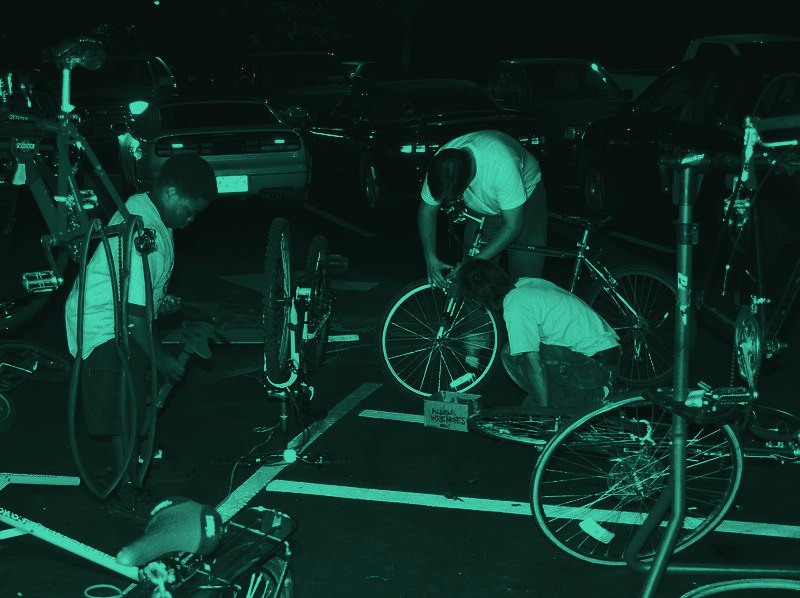
A job sheet scratched on a sticky note that slides under the counter, or a carbon-copy form the customer walks off with half-illegible: anyone running a bike shop has lived this, and it's usually the first place time — and money — leaks out. With service work accounting for up to 60-90% of a bike shop's revenue and 95% of Italian operators doing repairs, how a job sheet gets opened, tracked and closed isn't administrative housekeeping. It's the operational core of the business.
Why the paper form stops working
The trouble with paper isn't cosmetic. A paper form has no state: you can't tell whether a bike is still waiting for diagnosis, whether the quote has already gone to the customer, whether it's been approved, or whether it's sitting finished with nobody having called the owner yet. With e-bikes now making up roughly three quarters of bikes coming in for repair, and e-bike warranties flagged as the number one management headache of 2026, a sloppy job sheet — unclear on who authorized what, when, with which part — turns into a real liability the moment a customer disputes a charge or a manufacturer questions a warranty claim.
A digital job sheet fixes this at the root: every job gets an identifier, a status history and a record of who did what, which matters as much at the counter as it does when you need to show a supplier that a component was replaced by the book.
The flow: from quote to signature
A digital job sheet follows the real life of a repair: intake with photos and the customer's notes, the mechanic's diagnosis, a quote generated straight from that diagnosis instead of retyped from scratch, approval sent to the customer, the actual work, a quality check, and finally handover with a digital signature. Each step moves the job sheet into a new status, and that status is what the counter sees in real time — no more asking around "where are we with Mr. Rossi's bike."
The tricky part is always the handoff from quote to approval: that's where shops burn hours on the phone, and where an unresponsive customer physically ties up a repair stand. Turning the quote into something a customer approves with a tap, rather than a phone call that inevitably lands at the wrong moment, shrinks that bottleneck without anyone having to chase anyone.
Customer-visible status changes the phone calls
Once a customer can check for themselves where their bike stands — queued, in diagnosis, awaiting approval, in progress, ready — the number of "just checking in" calls drops noticeably. That's not a customer-experience nicety; it's counter time reclaimed for billable work, at a moment when supply-chain margins are already squeezed (down from 7.6% in 2021 to 3.2% in 2023) and every hour spent on the phone is an hour not spent on a repair stand.
This matters even more for e-bikes, where a part can take months to arrive: a clear status, with the reason for the wait attached, stops a customer from assuming the bike has been forgotten in a corner somewhere.
Intake times and real shop capacity
A digital job sheet that automatically timestamps when a bike comes in, when diagnosis starts and when a job closes gives a shop owner something paper never could: average intake-to-close time, broken down by job type and by mechanic. That's the data you need to see whether the actual bottleneck is diagnosis, a part on backorder, or a customer sitting on an approval — and to quote realistic delivery dates instead of hopeful ones, which matters a lot to customer trust given how unpredictable component lead times have become.
Knowing how many job sheets are open right now, and at which stage, is also the first step toward deciding whether the shop genuinely has room for an urgent walk-in or whether it's smarter to book it for later in the week — a call that's nearly impossible to make with any confidence just by eyeballing a stack of paper tickets on the counter.
If you run a bike shop and want to see a digital job sheet workflow in action, from quote to handover, take a look at CrankPal.
Make service your profit center
CrankPal handles job sheets, inventory, invoicing and customers in one place — with the workshop at the core.
Discover CrankPal for workshops Get the free guideGet new articles
Workshop management, industry data and maintenance. One email, no spam.