
Bike workshop software: what it actually needs to have
Bike workshop software: the must-have features for work orders, parts inventory and invoicing, explained in practical terms for shop owners.
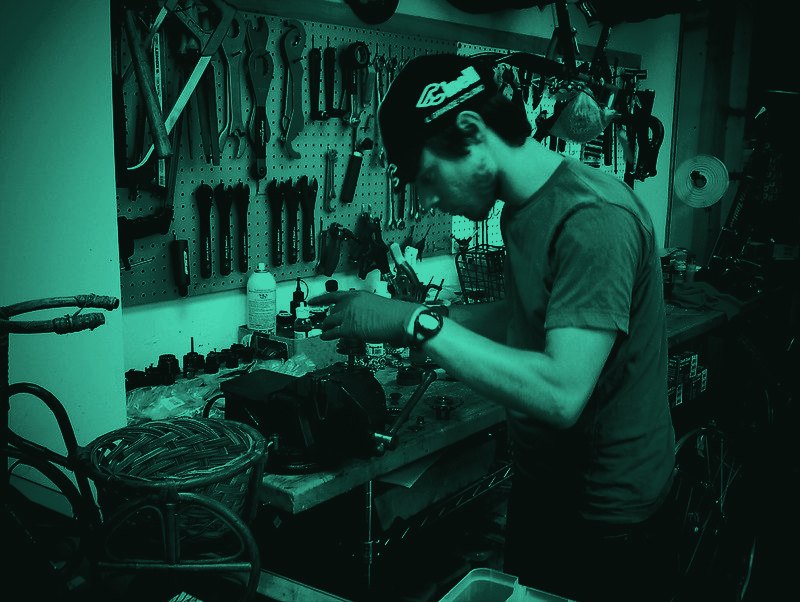
Every shop I've seen drowning on a Friday afternoon had the exact same problem, and it wasn't a wrenching problem. It was a systems problem: work orders scattered across sheets of paper, parts hunted for from memory in the back room, a customer calling to ask "where's my bike at" and nobody able to give a real answer. Bike workshop software exists to fix precisely that — to bring order to a workflow that, without the right tools, generates its own chaos. But not all workshop software is built the same, and picking the wrong one just means adding another screen to fill in instead of a tool that actually saves time.
The starting point for knowing what to look for is remembering what the workshop actually is for a bike shop today. Service work accounts for up to 60-90% of revenue in the better-run shops, and roughly 70% of real profit — it's the profit center, not a side service tacked onto sales. Software built for retail first, with service bolted on as a secondary module, starts out already behind.
Work orders: the core of the system
The first thing bike workshop software has to get right is managing the work order from intake to pickup. That means a status that's clear and always current (received, in progress, waiting on parts, ready), a history tied to the specific bike and not just the owner's name, and the ability to add labor and parts as the job progresses, without having to reconstruct the whole thing from memory at the end of the day. With eBikes now making up roughly three quarters of the bikes coming in for repair, and eBike warranty handling widely considered the industry's number-one management headache, a good system also needs to track serial number, motor and battery as structured data — not free-text notes nobody can find again when it's time to open a warranty claim.
Parts inventory: know what you have before you order
The second pillar is inventory. With component lead times that hit 340-700 days in 2022, and with nearly 40% of orders placed that same year never actually delivered, a shop that doesn't know for certain what's on the shelf risks duplicating orders, stalling a job for a part that was actually in stock, or promising a turnaround it can't hit. Solid workshop software ties inventory directly to work orders: when a part gets used on a repair, it's deducted automatically, not as a separate step someone forgets to do. For shops running more than one stock location — the shop floor and a van for house calls, for instance — visibility has to be unified: knowing where a part actually is, not just that it exists somewhere.
Customer communication and invoicing: closing the loop
The third piece, often underrated, is everything that happens around the repair itself: notifying the customer when the bike is ready, keeping a service history that's useful both for warranty claims and for pitching the next maintenance visit, and issuing a compliant invoice without retyping data the system already has. With retention and churn now cited in the industry as a meaningful slice of a shop's revenue, workshop software that keeps a real history of every bike and every customer becomes a loyalty tool, not just a back-office one.
What to rule out
It's worth being wary of software built generically for "any retail shop" and adapted to bikes with a few relabeled fields, and of tools that treat the workshop as an appendage of the register. The signals to look for run the other way: work order management that actually follows the real shop workflow, inventory that's connected rather than parallel, eBike-specific tracking, and a view that lets the owner see the workshop for what it is — the shop's true profit center.
If you're weighing a switch or you're still running on scattered spreadsheets and notebooks, CrankPal is built to put the workshop at the center: take a look at the platform for bike shops and see whether it can take some weight off your day-to-day.
Make service your profit center
CrankPal handles job sheets, inventory, invoicing and customers in one place — with the workshop at the core.
Discover CrankPal for workshops Get the free guideGet new articles
Workshop management, industry data and maintenance. One email, no spam.